The Millenium: Playing, Teaching, and Publishing​

The Millenium: Playing, Teaching, and Publishing

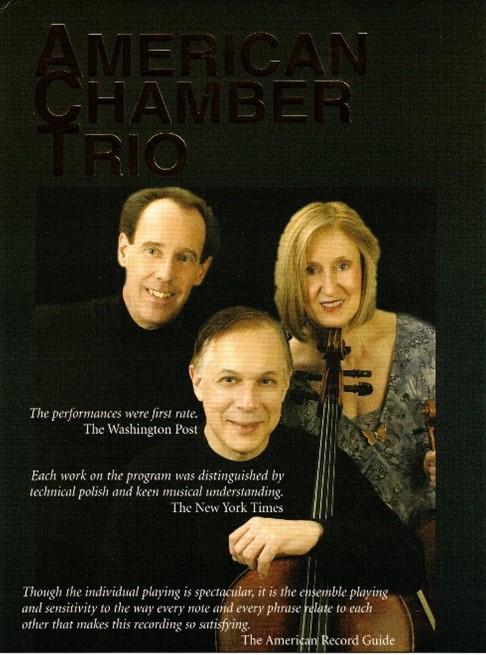
The millennium brought growth in three areas, most prominently contracts from three publishers: International Music, Mel Bay, and Ludwig Masters. Also, at that time I was engaged as Artist Teacher of Cello and Chamber Music at Valparaiso University, where I was able to work with many of June’s students along with my own. Finally, in our last years of performing, we did three concerts in Carnegie Recital Hall, Two Tours of China, and many concerts celebrating the 100th anniversary of the birth of Dimitri Shostakovich.

Our three concerts in Carnegie Recital Hall consisted of a recital of cello and piano sonatas by Beethoven, Brahms, and Chopin; a trio concert featuring Schumann’s D minor Trio and Dvorak’s Dunky Trio; and another concert featuring Shostakovich, Brahms C Major, and Mendelssohn D minor.

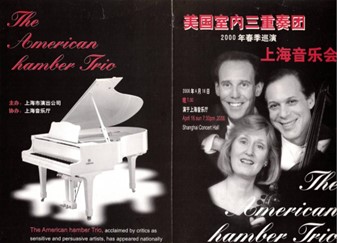
In 2002, we were invited to do a significant tour of China. The biggest concert was in Beijing as part of a festival that was called Meet in Beijing, which included the Berlin Philharmonic and the Royal Ballet and was sponsored by the Ministry of Culture. They provided a van, a guide, and a hotel which had a restaurant called Peaking Duck. Peaking duck is a delicacy and hard to get, unless you have enough money and know the right restaurant. We definitely took advantage. Incidentally, right across from our hotel was Kentucky Fried Chicken, with a nice big picture of Colonel Sanders, which was more heavily populated than our five-star restaurant. Also, with the van and the guide, we were shown the Forbidden City and the Great Wall. We were also escorted to the Beijing Conservatory of Music where they had a luthier shop which produced surprisingly good violins and bows. June bought three of them.

In Shanghai, we played at the Conservatory and met up with Sidney Harth, whom June studied with at Tanglewood in 1963 and was concertmaster of the Los Angeles Philharmonic, the New York Philharmonic, and the Chicago Symphony Orchestra. Sidney Harth was conducting Dvorak’s Symphony No. 8 with the orchestra. The one terror of the Shanghai Concert Hall was the staircase from the green rooms to the stage. That was terrifying because I don’t remember a banister.

One misadventure was when June disappeared in the Shanghai airport, causing us to miss our plane to Beijing. Somehow, when we did arrive, our guide and the van were waiting for us.

Three other places that we played in China were Hong Kong, Nanjing, and Hangzhou. Hangzhou was on what was called the West Lake, and we were shown where the legendary meeting between Nixon and Zhou Enlai took place. We had played in Hong Kong in 1983, and it had changed a great deal, BUT our fee was barely enough to cover dinner at the famous Peninsula Hotel.

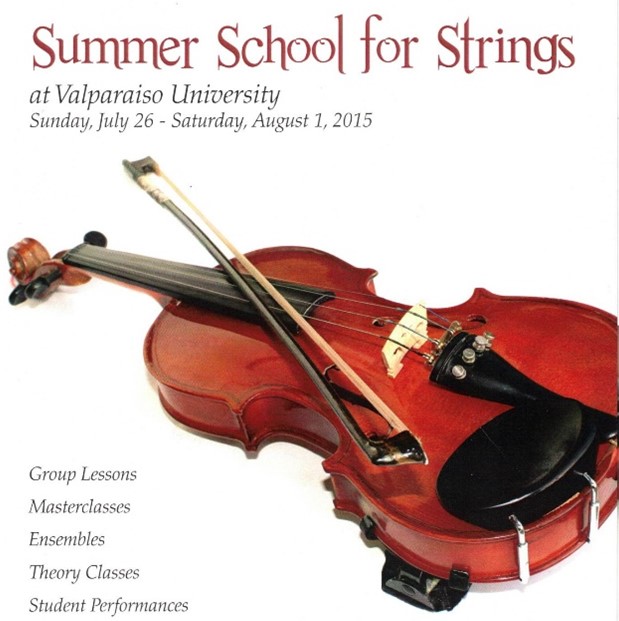
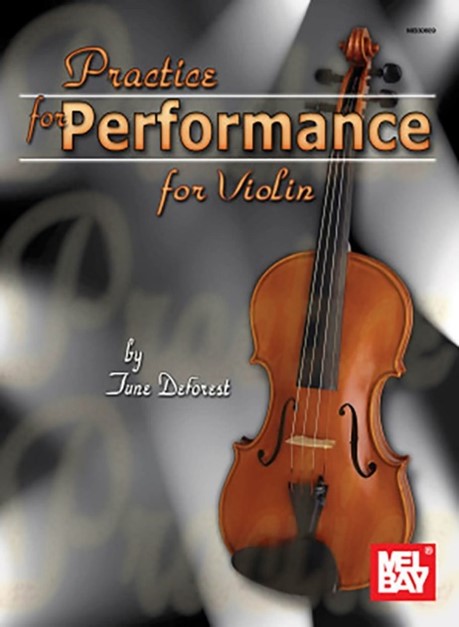
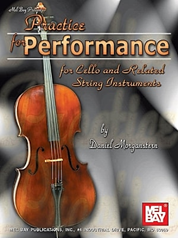
One of the things that June took the most seriously was teaching the violin. She had no ambitions to go into competition with Almita Vamos or Dorothy DeLay, so her ambitions were not about the aggrandizement of her reputation, but entirely for the students. It didn’t matter to June whether her various students had talent or brains, but she was willing to go the extra mile to get a very sub-standard talent good enough to pass her exam to get her degree. On the other hand, if she did have somebody with talent and could bring them up to a respectable level, she would enter them into the Music Teachers National Association Competition, pay the entrance fee, drive them to the competition, and pay for the pianist. Five of them represented the state of Indiana, which definitely upgraded their resumes, either going to college or to graduate school. She went out of her way to make friends with important violin teachers in big universities so she could place her students, and they were happy to have her sending students to them who were well-trained and knew what was required. Additionally, she ran three summer schools at Valparaiso, and when our colleague, Eric Larsen, became director of the Meadowmount School of Music, June helped them gain admission to this world-famous institution. She codified her ideas about teaching in a treatise called Practice for Performance. This was a collaboration between June and me.
International Music Publications

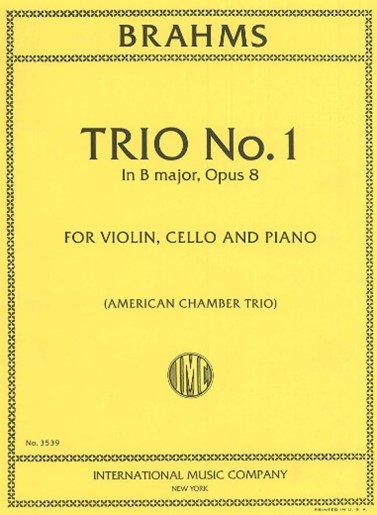
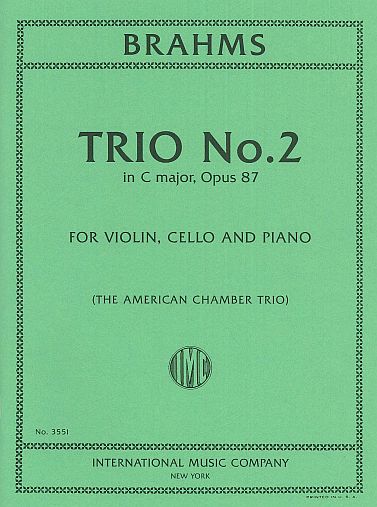
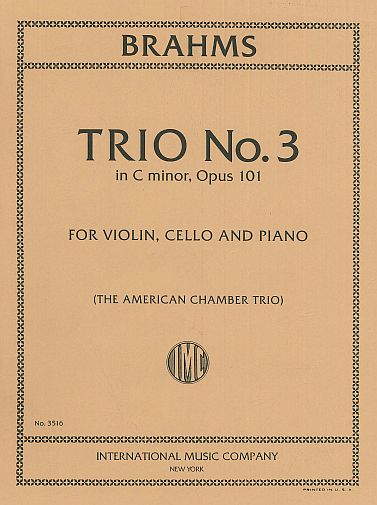
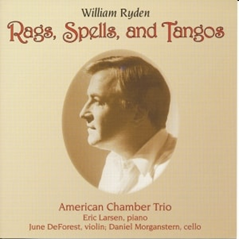
Without a doubt, the person who will have the greatest impact on my legacy is William Ryden (1939-2018), an excellent composer who served for many years as the editorial director of International Music Company in New York. I first met Bill when I suggested that International publish a compilation of cello solos from the operatic and ballet repertoire. Leonard Rose edited three books of orchestral excerpts for IMC, and they also published Strauss and Wagner excerpt books, but those books didn’t include the very important opera and ballet repertoire. Since I had studied with Leonard Rose and had been principal cellist of both a major ballet and a major opera company for many decades, Bill embraced the project and published the book in 1999, the year that Puccini’s music entered the public domain. When a review came out two years later in the American Record Guide of our recording of the complete Brahms trios for violin, cello, and piano, Bill asked us to make editions of these trios for IMC. This was most unusual, since IMC already published unedited editions of all three trios.

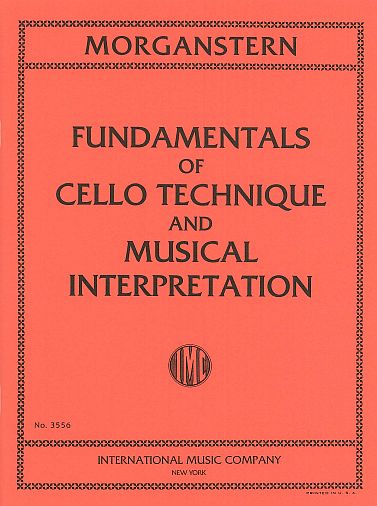
After the success of the Brahms, Bill mentioned that a trumpet book by Michael Sachs, the principal trumpet player of the Cleveland Orchestra, was selling very well. He asked me if I could write a method book for cello. I was happy to write a method book, and I took the opportunity to write in detail about the way Leonard Rose taught the bow arm with the aid of Scott Ballentyne, who was Rose’s assistant at Juilliard and a great cellist himself. We were able to produce an edition that was worthy of our great master.

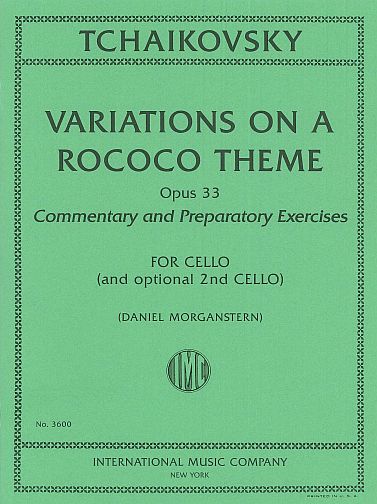
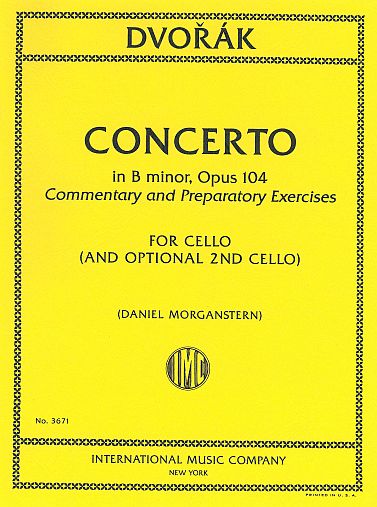
Bill mentioned that the Sachs book had explanations and practice exercises for the Hummel and Haydn Trumpet Concertos, and he wanted to know if I could do something similar for the cello. With Bill’s help and encouragement, I made editions of concertos by Boccherini, Haydn, Saint-Saens, Schumann, Dvorak, Lalo, Elgar, and Tchaikovsky. Making these editions gave me the opportunity to ask the following question on every eight bars of every concerto: “if I was having a bad day, and I had to play these eight bars at the Metropolitan Opera House, and sound good doing it, how would I finger and bow these passages?” I was able to publish cello reductions of the orchestral accompaniments so that teachers could accompany their students, and I was able to include exercises to help with specific passages. The following links lead to my edition of the Dvorak Concerto with explanations, practice exercises, and the second cello part, which effectively works with the solo part.

Cello solo and two cello score:

Teaching

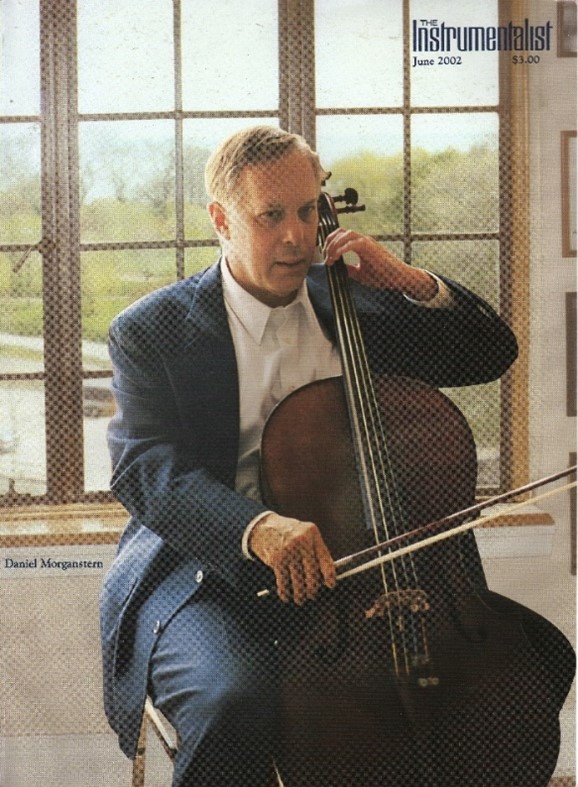
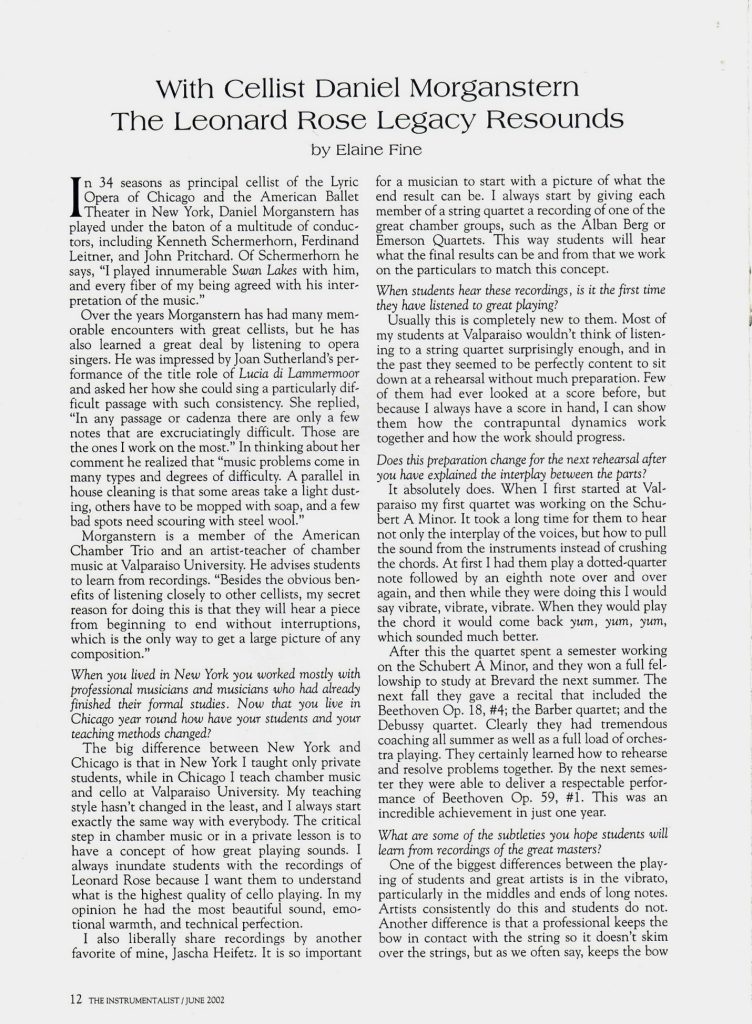
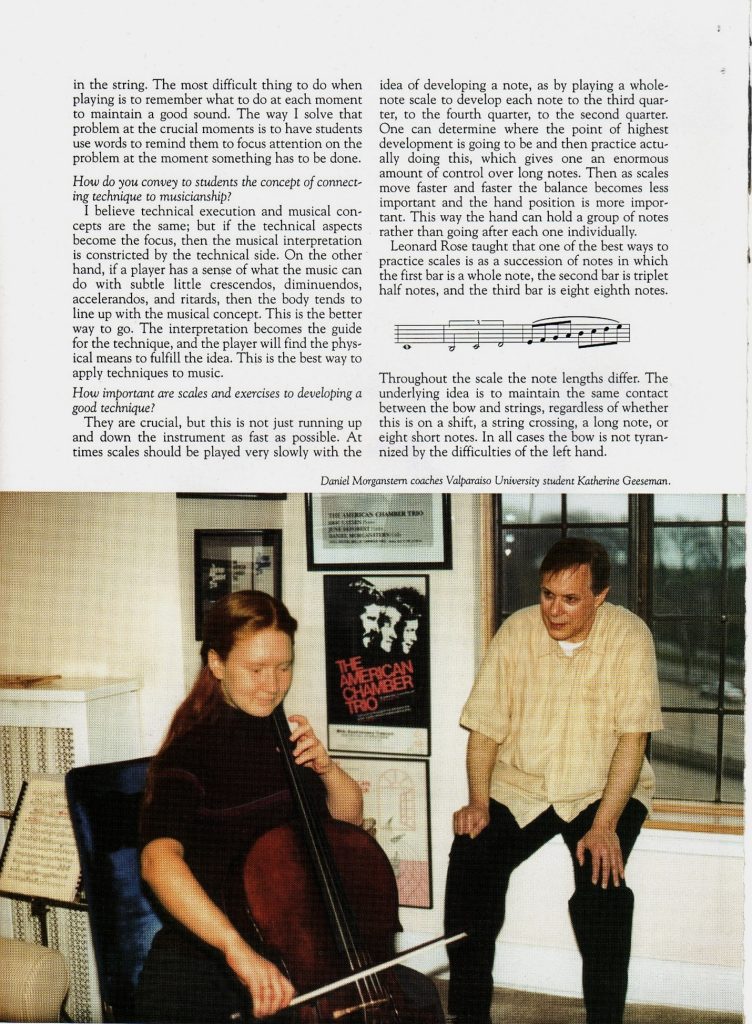
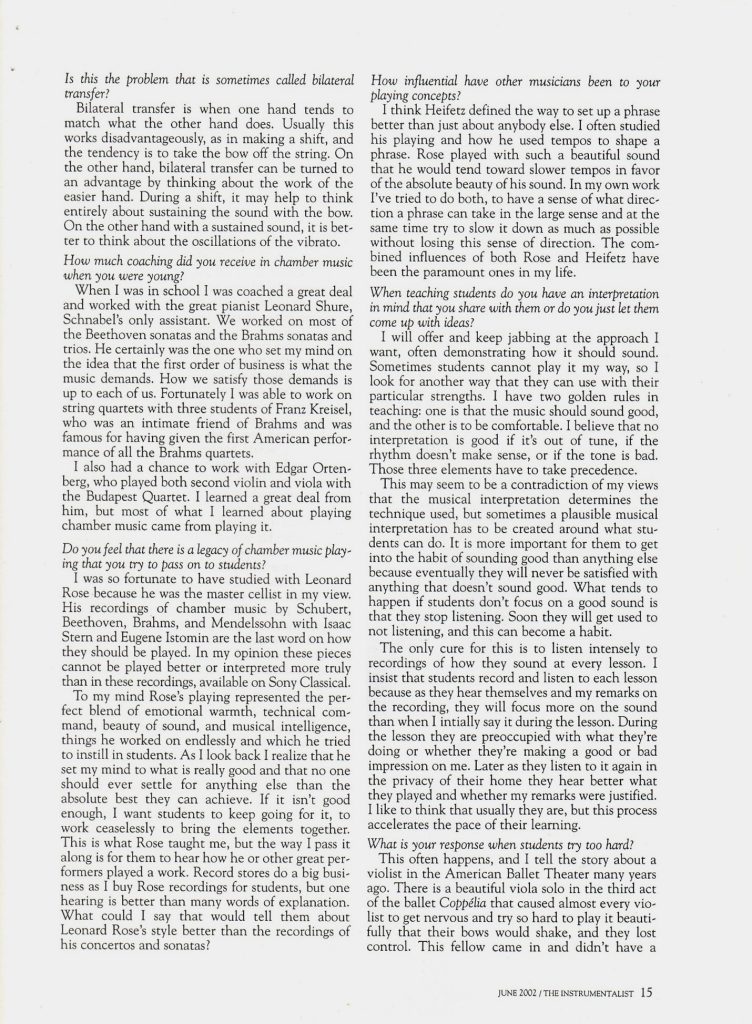
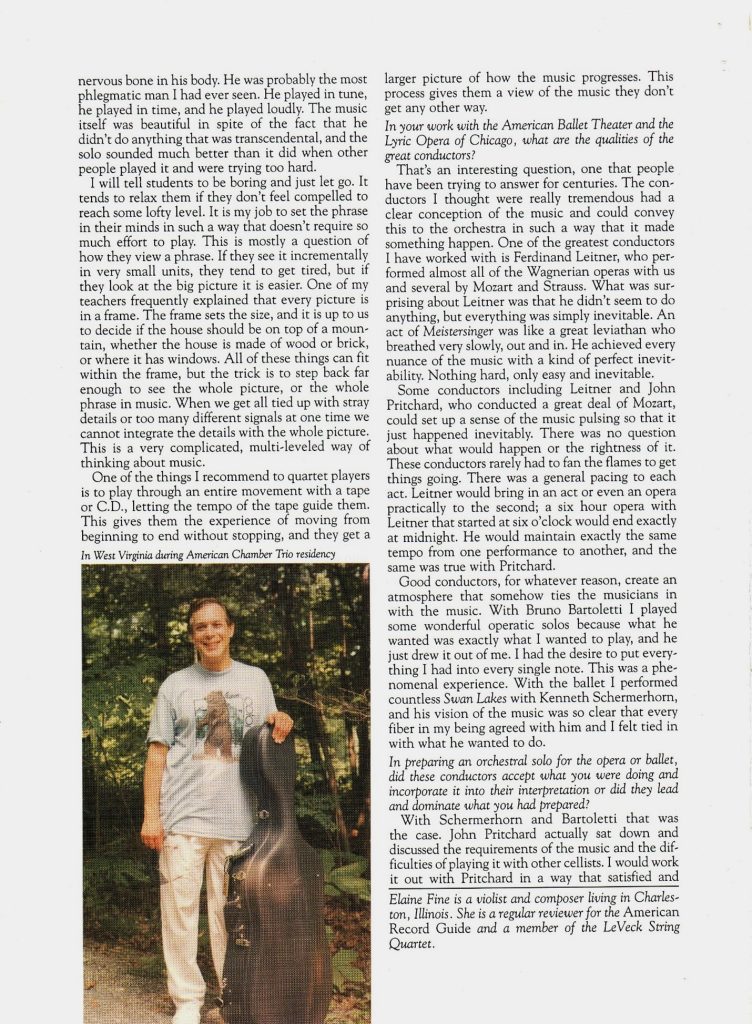
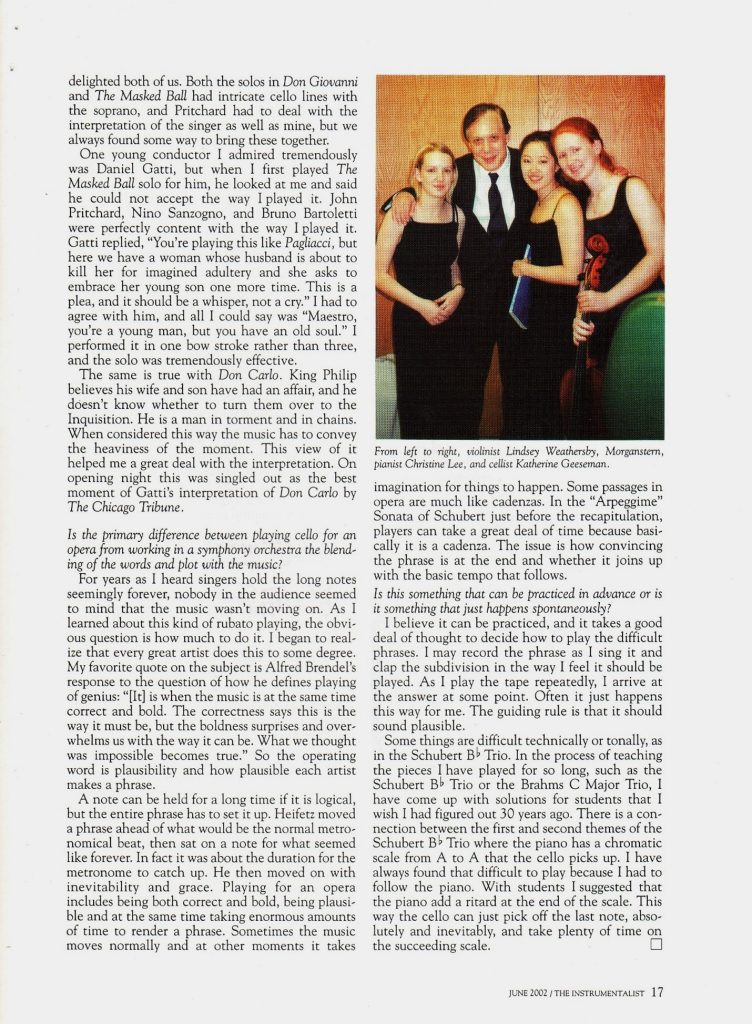
When I was appointed Cello and Chamber Music Teacher at Valparaiso University in 2002, The Instrumentalist published a very long and thorough interview in which I was able to talk about my values and methods which evolved over a lifetime:

Epilogue

Three projects that I look upon with pleasure and pride in the millennium were:

  1. The publication of Practice for Performance
  2. Six concerts of the music of Shostakovich
  3. Our recording of Rags, Spells, and Tangos by Wiliam Ryden

Here are some reviews of our work: https://www.americanchamberconcerts.org/reviews

Copyright Daniel Morganstern. All Rights Reserved.